The Blight
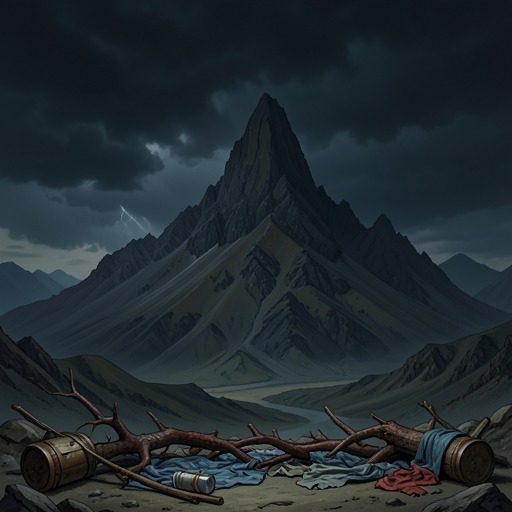
A Court of Thorns and RosesThe Blight is the apparent magical sickness that transforms the crisis in Prythian from a remote supernatural danger into a concealed regime of conquest. It weakens magic, destabilizes the courts, produces lethal attacks, and threatens to cross into the Mortal Realm; its decisive significance lies in the revelation that it is not an independent disease at all, but a name used to disguise Amarantha’s deliberate destruction and control of the land.
Definition and Initial Symptoms
The Blight is first presented by Tamlin as a sickness affecting magic rather than bodies. It has spread across Prythian for almost fifty years, leaving the Spring Court’s estate and surrounding lands unusually empty because many inhabitants have fled. The condition makes magic behave strangely, and even Tamlin’s own powers have been diminished by it. Its most visible early symptom is the permanent transformation of the court’s inhabitants during a masquerade forty-nine years earlier: the masks they wore became fixed to their faces, while Tamlin’s beast form remained unmasked. The affliction therefore does not produce one uniform bodily result; it can impose a mask on one person and reduce another to a beast.
Tamlin insists that the Blight is not a plague or ordinary illness. It is focused on magic and on those dwelling in Prythian. When Andras crossed the Wall, he had been sent to search for a cure, showing that the crisis was understood within the Spring Court as a longstanding magical emergency rather than a single attack. Tamlin also acknowledges that the condition might affect humans and the territory beyond the Wall. The danger to the Mortal Realm is described as possible rather than immediate: the sickness moves slowly, magic has remained weakened but apparently stable for decades, and mortals are considered safe for the moment.
Escalation Across the Courts
The apparent illness gradually acquires the scale of a transregional catastrophe. Lucien reports that the Blight has killed two dozen younglings in the Winter Court. According to his contact, it burned through their magic, then shattered their minds, and no one in the court could stop it once it had turned its attention toward them. The deaths make the Blight more than a condition that diminishes powers or alters appearances; it becomes a force capable of destroying lives, with consequences especially devastating because younglings are rare among the faeries.
The attacks are not confined to Winter. Lucien reports that other courts are being hit hard and that the Blight appears to be moving farther south with every assault. The Night Court alone is said to remain untouched. This uneven distribution makes the crisis resemble a spreading environmental or magical disaster, but it also establishes a political pattern: some territories suffer directly while another remains conspicuously unscathed. At the Spring Court, the disappearance of barriers between courts and the arrival of creatures such as the Bogge and the puca are treated as further signs that the land’s protective order is failing.
The Mortal Realm experiences the crisis through rumor and border violence. Human communities lack a standing army capable of monitoring the Wall and rely instead on the Treaty forged five hundred years earlier, while wealthy landowners hire mercenaries to guard their borders. Stories circulate that faeries and beasts are slipping through the Wall, including reports of martax crossing into a village and tearing half of it apart. The Wall, once imagined as the firm division created after the War, becomes an uncertain boundary whose breaches suggest that the magical crisis has consequences beyond Prythian.
The Revelation of Amarantha
The meaning of the Blight changes when Alis explains that there is no sickness separate from Amarantha. The apparent collapse of borders is not an accidental symptom of a magical disease; Amarantha has deliberately reduced them to rubble. She has also sent creatures into the Spring Court to test whatever strength Tamlin has left. What seemed like an impersonal disaster is therefore revealed as an organized method of surveillance, harassment, and military pressure.
This revelation connects the Blight to Amarantha’s history and political objective. After the Treaty, she presented herself as a reforming courtier who sought reconciliation and expanded trade between Hybern and Prythian. For fifty years she moved among the courts, persuading High Lords with promises of communication and shared resources while secretly bringing her personal forces across the same trade routes. Forty-nine years earlier, she poisoned the High Lords at a ball, stole much of their power, and seized Prythian within days. The masks, weakened magic, emptied estates, collapsing borders, and hostile creatures are consequently not unrelated effects: they are conditions of a territory stripped of autonomous power.
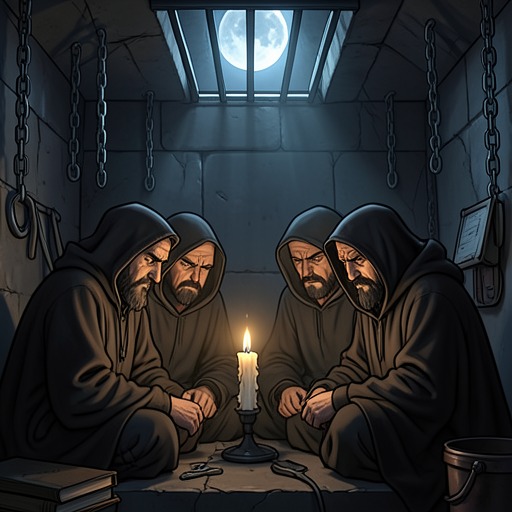
Amarantha’s rule also depends on controlling the interpretation of the crisis. The courts call her the Deceiver, yet the court leaders and subjects have been forced to live under the explanation that their powers were taken or damaged by a mysterious Blight. The language of sickness obscures the agent responsible and turns political violence into an apparently natural calamity. Once the disguise is removed, the threat to the Mortal Realm becomes legible as a planned invasion. Amarantha is building an army from the most lethal faeries in Prythian and Hybern, offering sanctuary to creatures too dangerous even for the Night Court, and waiting for the moment to break the Treaty and attack human lands.
Political Function and Narrative Significance
The Blight operates as both magical condition and political cover. Its slow movement permits uncertainty, rumor, and delayed recognition, while its visible effects weaken resistance before the full structure of Amarantha’s rule is understood. Tamlin’s diminished power leaves the Spring Court vulnerable; the vanished court boundaries allow monsters to enter; attacks along the Wall make the Mortal Realm feel exposed; and the deaths in Winter demonstrate the cost of resistance or helplessness under a regime that can direct destruction across borders.
The concept also links personal transformation to imperial violence. The masks imposed during the masquerade are not merely ornaments but permanent signs of power seized and identity controlled. Tamlin’s statement that his present strength is only a shade of what he once commanded places his beast form, his diminished magic, and the condition of the Spring Court within the same history of dispossession. The Blight makes domination appear to be an ailment of the world itself, even though its effects have been produced through the actions of a conqueror.
Its final importance is therefore epistemological as well as political. Feyre initially receives the Blight as an explanation from Tamlin, whose limited knowledge and guarded speech reinforce the impression of an external force. Later, Alis’s account supplies the recognition that reorganizes the earlier evidence: the attacks, the failing borders, the stolen powers, and the danger to humans are all parts of Amarantha’s rule. The Blight is the name of a hidden cause before it is the name of a visible effect, and its exposure marks the movement from fear of an unknowable catastrophe toward understanding the enemy who has engineered it.